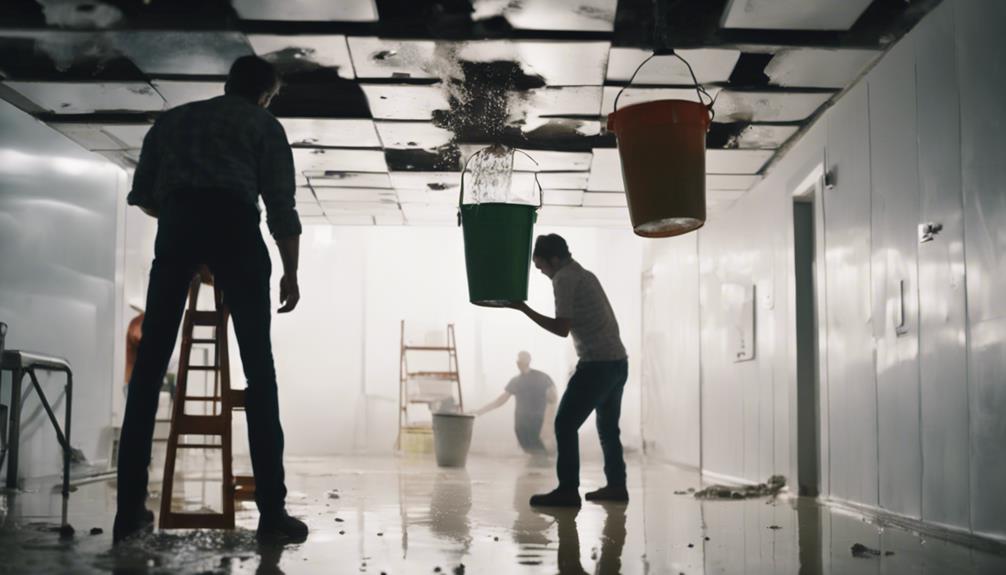
Upon discovering a leak in your commercial building, take immediate action to prevent further damage and avoid risks such as structural issues and business disruptions.
Contact professionals promptly for accurate diagnosis and resolution. Shut off the water source, clear the affected area, and absorb standing water to mitigate additional damage. Consider engaging commercial water damage services for swift mitigation and restoration.
Minimize business disruptions by containing the leak and transparently communicating with employees and stakeholders. Seeking expert guidance can help prevent future leaks and related issues.
Discover detailed steps to effectively handle leaks and safeguard your commercial property.
Key Takeaways
Act promptly to prevent further damage by shutting off water source.
Clear affected area of valuables and absorb standing water.
Contact professional water damage restoration service for swift assessment.
Engage experts for accurate diagnosis, repair, and preventive advice.
Minimize business disruptions by relocating services and transparent communication.
Immediate Response to Suspected Leak
Upon suspecting a leak in your commercial building, it is important to take immediate action to prevent further damage and mitigate potential risks. Leaks, if left unattended, can lead to structural issues, high repair costs, and business disruptions.
Promptly addressing leaks is vital to maintaining the integrity of your building and avoiding extensive water damage. Quick identification and resolution of leaks can save you time and money in the long run, as well as prevent any potential health hazards associated with mold or mildew growth.
Hence, upon noticing any signs of a leak, such as water stains, increased water bills, or damp odors, contacting professionals for assistance is the best course of action to make sure the problem is properly addressed.
Importance of Professional Assistance
Seeking professional assistance is essential when dealing with leaks in commercial buildings to guarantee prompt and effective resolution of plumbing issues.
Expertise: Professionals have the knowledge and experience to accurately diagnose and repair leaks, ensuring the problem is addressed correctly.
Specialized Equipment: They possess specialized tools and equipment necessary for locating and fixing leaks efficiently.
Preventive Maintenance: Professionals can offer advice on preventive maintenance measures to avoid future leaks and water damage, saving time and money in the long run.
Mitigating Additional Damage
To effectively minimize further damage caused by leaks in commercial buildings, immediate action must be taken to address the issue promptly and efficiently. Upon detecting a leak, the first step is to shut off the water source to prevent additional water damage.
Clear the affected area of any valuable items to prevent them from getting damaged. Use towels or mops to absorb any standing water. Increase ventilation by opening windows and using fans to aid in drying out the space.
Contact a professional water damage restoration service to assess the extent of the damage and provide expert solutions for repair. Acting swiftly can help mitigate the impact of the leak, prevent structural damage, and minimize business disruptions.
Utilizing Commercial Water Damage Services
Engage professional commercial water damage services to efficiently address and mitigate the impact of leaks in your commercial building.
Immediate Response:
Water damage experts from Deakins Restoration offer rapid response 24/7.
They assess the situation promptly to prevent further damage.
Utilize industrial-grade equipment for efficient water extraction.
These professionals are equipped to handle diverse water damage scenarios, ensuring a swift and thorough restoration process.
Minimizing Business Disruptions
Effectively managing business disruptions caused by water leaks in commercial buildings is vital for maintaining operational continuity and minimizing financial losses.
Upon discovering a leak, promptly assess the situation to determine the extent of damage and potential impact on business operations. Implement immediate measures to contain the leak and prevent further spread of water damage. Consider relocating employees or services to unaffected areas within the building to guarantee minimal disruption.
Communicate transparently with employees, clients, and stakeholders about the situation and any necessary adjustments to schedules or services. Prioritize the repair process by enlisting the help of professional leak repair experts from Deakins Restoration to swiftly address the issue and restore normal business activities.
Guidance From Leak Repair Experts
Drawing on the expertise of seasoned professionals in leak repair services can provide invaluable guidance in swiftly addressing and resolving water leaks in your commercial building. These experts from Deakins Restoration can offer:
Immediate assessment of the leak source and extent of damage
Recommendations for the most effective repair methods
Advice on preventative measures to avoid future leaks
Preventative Measures for Future Leaks
To prevent future leaks in your commercial building, implementing proactive maintenance measures is crucial. Regularly scheduled inspections of plumbing systems can help detect potential issues before they escalate into leaks. Conduct routine checks on faucets, toilets, and underground pipes to verify everything is functioning correctly.
Consider investing in advanced leak detection technology, such as wireless water leak detectors or cloud-based sensors, to promptly identify any leaks that may arise. Educate your staff on the importance of reporting any signs of leaks immediately to avert further damage.
Frequently Asked Questions
Can Leaks in a Commercial Building Cause Health Hazards?
Leaks in a commercial building can indeed pose health hazards. Water leaks can lead to mold growth, which can cause respiratory issues and other health problems. Promptly addressing leaks is essential to maintaining a healthy environment.
How Do Leaks Impact the Structural Integrity of a Building?
Leaks can compromise a building's structural integrity by causing water damage to foundations, walls, and ceilings. Over time, leaks lead to mold growth, rot, and weakening of materials. Timely detection and repair are essential to prevent costly structural repairs and maintain safety.
Are There Insurance Options for Commercial Water Damage?
Insurance options for commercial water damage may vary. Property insurance typically covers sudden and accidental water damage, but may exclude gradual leaks. Consult with your insurance provider to understand coverage and consider additional policies for thorough protection.
Can Leaks Lead to Mold Growth and Other Secondary Issues?
Leaking in commercial buildings can lead to mold growth and other secondary issues due to the moisture exposure. Mold thrives in damp environments, posing health risks and structural damage. Promptly addressing leaks is essential to prevent these complications.
What Are the Potential Legal Implications of Not Addressing Leaks Promptly?
Failure to promptly address leaks in commercial buildings can lead to legal implications such as property damage claims, mold growth lawsuits, and breach of lease agreements. Timely leak repairs are essential to prevent costly legal disputes and maintain building integrity.
Water damage at home commonly arises from broken pipes, water overflow, faulty appliances, clogged gutters, and sewage backups. To prevent such damages, conduct regular plumbing inspections to catch leaks early and install leak detection systems.
Be vigilant with water usage to avoid overflow, promptly repair malfunctioning appliances, and clean gutters at least twice a year. Address sewage backups immediately to avert health hazards. Early moisture detection and proper gutter maintenance are key in preventing water damage.
These steps safeguard your property and well-being effectively.
Key Takeaways
Regular plumbing inspections detect leaks early.
Turn off faucets to prevent water overflow damage.
Maintain appliances to avoid leaks and mold.
Clean gutters to prevent water seepage.
Act promptly on sewage backups to prevent health hazards.
Broken or Leaking Pipes
Leaking or broken water pipes pose a common and serious risk of water damage within residential properties. Changes in water pressure or freezing temperatures can cause pipes to burst, leading to costly repairs.
Even minor dripping leaks can result in substantial water damage over time, often hidden within walls. Early detection of moisture is vital to prevent extensive damage.
To address this issue, regular inspections of plumbing systems are recommended to catch leaks early. Installing a water leak detection system can provide added protection by alerting homeowners to potential leaks before they escalate.
Promptly repairing any leaks and ensuring proper insulation can help prevent significant water damage in the long run.
Water Overflow
Water overflow from faucets can result in significant damage to various surfaces and structures within a home if left unattended. Overflow can seep into flooring, carpeting, and ceilings, causing permanent wood damage and mold growth if not promptly addressed.
To prevent such occurrences, it is important to always keep an eye on running faucets and act quickly to avoid costly damage to your home and belongings. Implementing simple habits like turning off faucets when not in use can save you from the hassle of dealing with water damage.
Faulty Household Appliances
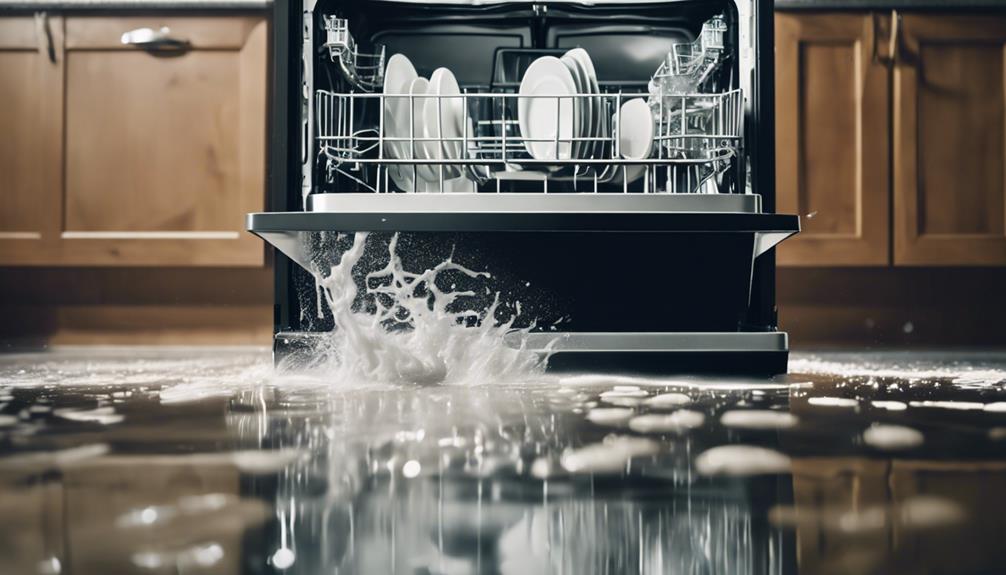
Regular maintenance of household appliances is essential in preventing leaks and subsequent water damage in your home. Malfunctioning appliances, such as dishwashers, can be a common source of leaks leading to significant water damage.
Leaks from dishwashers can damage cabinetry and promote mold growth if left unattended. To prevent appliance-related water damage, it is vital to conduct regular maintenance checks on your appliances. Even if there are no visible signs of leakage, water damage may be occurring where it is not immediately visible.
Immediate cleanup and repair of any leaking appliances are necessary to mitigate the risk of extensive damage to your home.
Clogged Gutters
Maintaining clean gutters is crucial for preventing water seepage into your property and avoiding potential damage.
Clear gutters of debris like leaves and twigs regularly.
Schedule gutter cleaning at least twice a year.
Consider hiring Deakins Restoration for thorough gutter maintenance.
Make sure downspouts are free of blockages to allow proper water flow.
Install gutter guards to prevent debris buildup and minimize maintenance needs.
Sewage Backups
In situations where sewage backups occur, immediate action is essential to mitigate potential water damage and health hazards. Sewer backups can result from storms or tree roots obstructing pipes, leading to significant water damage if left unaddressed.
Hiring an expert for sewer line cleaning can help prevent tree root blockages and minimize the risk of backups. It is advisable to contact your insurance agent to discuss coverage options against sewage backups.
Acting promptly in the event of a sewage backup is vital to prevent catastrophic water overflow and the spread of harmful contaminants. Prompt attention to sewage backups can save homeowners from expensive repairs and health complications, emphasizing the importance of proactive measures in maintaining a safe and functional home environment.
Early Moisture Detection
Implementing an efficient early moisture detection system is essential for safeguarding your home against potential water damage risks.
Regularly inspect areas prone to moisture buildup such as basements and crawl spaces.
Invest in moisture detection devices like Deakins Restoration smart sensors or alarms.
Keep an eye out for signs of water damage such as musty odors or visible mold growth.
Act promptly upon detecting any moisture issues to prevent further damage.
Consider professional inspection and maintenance of plumbing systems to catch leaks early on.
Proper Gutter Maintenance
How can homeowners effectively prevent water damage caused by clogged gutters?
Proper gutter maintenance is essential to avoid water seepage into the property. Regularly cleaning gutters is important in preventing overflow. It is recommended to remove leaves, twigs, and debris from gutters at least twice a year.
For a thorough cleaning, consider hiring a gutter specialist. When cleaning gutters, make sure to follow proper safety precautions to prevent accidents.
Frequently Asked Questions
How Can I Detect Hidden Leaks in My Walls or Ceilings?
To detect hidden leaks in walls or ceilings, utilize advanced moisture detection tools. Look for signs such as damp spots, mold growth, or peeling paint. Engage professionals for thorough inspections. Early identification of leaks is essential to prevent extensive water damage.
What Steps Can I Take to Prevent Water Damage From Appliances?
To safeguard against water damage from appliances, make sure to conduct regular maintenance to detect leaks early. Check hoses for wear, clean filters, and inspect connections. Act swiftly upon any signs of malfunction. Prompt repairs can help prevent costly water damage and mold growth.
Are There Signs to Look Out for That Indicate Clogged Gutters?
Clogged gutters can exhibit signs like water overflowing from the sides of gutters during rain, water pooling near the foundation, or visible plant growth in gutters. Timely cleaning and maintenance can prevent water seepage and potential property damage.
How Can I Protect My Home From Potential Sewage Backups?
To protect your home from potential sewage backups, consider regular sewer line inspections, especially before heavy rainfall. Install a backwater valve to prevent water from flowing back into your home. Maintain trees and shrubs away from sewer lines to prevent root intrusion.
What Are the Long-Term Effects of Untreated Water Overflow?
Untreated water overflow can lead to permanent structural damage, mold growth, and compromised indoor air quality. Quick action is essential to prevent costly repairs and health risks. Timely mitigation and restoration are vital for long-term property preservation.
My toilet is running. I must catch it to prevent water wastage, potential flooding, and expensive repairs. Guarantee timely repairs to avoid damage and high water bills.
Regular maintenance prolongs the toilet's lifespan and enhances efficiency. Seek professional help for expert solutions and peace of mind. Preventive measures like inspecting for leaks and prompt repairs are crucial. Remember to adjust valves and replace worn-out parts promptly.
To find reliable help, ask for recommendations and check online reviews. Make sure the professional offers guarantees on their work. Don't ignore a running toilet; it could lead to significant issues down the line.
Key Takeaways
Check for common causes like a malfunctioning fill valve or worn-out flapper.
Address running toilets promptly to prevent water wastage and potential flooding.
Timely repairs are essential to avoid damage, high water bills, and health hazards.
Practice preventive maintenance to save costs, extend toilet lifespan, and conserve water.
Seek professional assistance for expert diagnosis, quality repairs, and peace of mind.
Common Causes of Toilet Running
Frequently, a running toilet is caused by issues such as a malfunctioning fill valve or a worn-out flapper. The fill valve, also known as the ballcock, may fail to shut off, leading to continuous water flow.
A worn, chipped, or hardened flapper can prevent the toilet from properly sealing, causing water to leak into the bowl. Additionally, an eroded flush valve, loose or damaged flush lever, or insufficient slack in the flapper chain can all contribute to a toilet that runs continuously.
Identifying and addressing these common causes promptly can help prevent water wastage, high bills, and potential damage. Regular maintenance and timely repairs are essential in ensuring the efficient operation of your toilet.
Potential Risks of Running Toilets
Running toilets pose significant risks to both your household and the environment due to continuous water wastage and the potential for extensive damage if left unresolved.
Wastage of a substantial amount of water
Increased risk of overflowing and flooding
Leading cause of toilet failures
Potential flooding damage
Risks for septic systems
Importance of Timely Repairs
Timely repairs to address issues with a running toilet are crucial to prevent water wastage and potential damage to your home. Ignoring a running toilet can lead to unnecessary spikes in your water bills and increase the risk of flooding, which may result in costly repairs.
Additionally, a continuously running toilet can pose health hazards and put a strain on your septic system. By promptly fixing the problem, you can avert these risks and guarantee the efficient operation of your toilet.
Seeking professional help when needed ensures that the repairs are done correctly and can help you return to a clean, healthy home swiftly. Don't delay - address running toilet issues promptly to save water and prevent further damage.
Benefits of Preventive Maintenance
Regular inspection of toilet components is essential to guarantee the efficient and reliable operation of your toilet system. By implementing preventive maintenance practices, you can reap several benefits, including:
Cost Savings: Identifying and fixing minor issues early can prevent costly repairs in the future.
Extended Lifespan: Regular maintenance can prolong the life of your toilet system, saving you money in the long run.
Improved Efficiency: Proper maintenance ensures that your toilet operates at peak performance, conserving water and energy.
Enhanced Hygiene: Maintaining a clean and well-functioning toilet reduces the risk of bacterial growth and contamination.
Peace of Mind: Knowing that your toilet is well-maintained and unlikely to malfunction provides reassurance and convenience.
Recommended Preventive Measures
To guarantee peak functionality and longevity of your toilet system, proactive maintenance practices are highly recommended. Here are some preventive measures you can take to make sure your toilet runs smoothly:
Preventive Measure
Description
Regular Inspection
Check for leaks, cracks, or worn-out components.
Prompt Leak Repair
Fix any leaks immediately to prevent water wastage.
Adjust Fill Valve
Ensure the fill valve or ballcock is set correctly.
Replace Worn-Out Parts
Replace any worn-out flappers or valves promptly.
Seeking Professional Assistance
When seeking professional assistance for your running toilet issue, consider contacting a licensed plumber for efficient resolution. Plumbing experts possess the necessary skills and experience to diagnose and fix the problem promptly. Here are five reasons why hiring a professional plumber is beneficial:
Expertise: Plumbers have specialized knowledge in dealing with various toilet issues.
Efficiency: They can quickly identify the root cause of the problem and provide effective solutions.
Quality Work: Professionals guarantee that repairs are done correctly to prevent future issues.
Safety: Plumbers follow proper safety protocols to avoid accidents during repairs.
Peace of Mind: Knowing that a qualified professional is handling the repair can alleviate stress and uncertainty.
Understanding Professional Services
Understanding the range of professional services available for addressing running toilet issues is essential for ensuring efficient and effective resolution. Professional services encompass a wide array of options, including expert assistance, 24/7 availability, and the ability to return to a clean, healthy home promptly.
These services are often provided by franchises or corporate branches, offering varied prices and service packages depending on the location. By engaging professional help, individuals can benefit from the expertise and specialized tools that these professionals bring to the table.
Whether it's a fill valve malfunction or a worn-out flapper causing the problem, professional services can provide the necessary solutions to rectify the issue and prevent further damage.
Locating Reliable Professional Help
In the process of addressing running toilet issues, sourcing reliable professional help is crucial to efficiently resolving the problem and preventing further damage. When seeking assistance, consider the following:
Ask for recommendations from friends or family members.
Check online reviews for local plumbing services.
Inquire about the professionals' experience and certifications.
Request quotes from multiple plumbers to compare pricing.
Make sure the chosen professional offers a guarantee on their work.
These steps can help you find a trustworthy plumber who can effectively fix your running toilet and safeguard your home from potential water damage.
Locating and addressing a main water valve leak is essential. To prevent extensive damage, promptly find and shut off the main valve. Mitigate potential harm by stopping the water flow quickly.
Besides, familiarize yourself with fixture valves behind fixtures and understand different valve designs. Knowing how gate, ball, and globe valves operate is important. Additionally, make sure you can locate the main water shut off valve in your home.
Keep in mind that regular maintenance and testing of valves are crucial for proper functionality. Take immediate action to prevent water damage and protect your property. Further knowledge awaits on valve maintenance and expert recommendations.
Key Takeaways
Regularly inspect the main water valve for leaks.
Know the location of the main water shut off valve.
Test the main water valve for proper functionality.
Immediate action needed for any main water valve leaks.
Educate family members on shutting off the main water valve.
Importance of Knowing Valve Location
Knowing the location of your main water shut off valve is a critical aspect of home maintenance and protection against potential water damage. When a water leak occurs, being able to immediately turn off the water supply can prevent significant damage to your property.
Regular maintenance of these valves throughout the year is vital to guarantee they function properly when needed. As experts at Deakins Restoration advise, testing all valves in your home at least twice a year is a good practice.
It's also important to educate all family members about the location of these valves and how to shut them off in case of an emergency. Taking these proactive steps can help mitigate the impact of water leaks and prevent costly repairs.
Immediate Action for Water Leaks
In case of water leaks, it's essential to promptly locate and shut off the main water valve to prevent further damage to your property. When faced with a leak, my immediate action is to turn off the main water valve to stop the flow of water and mitigate any potential damage.
This action is vital in preventing extensive water damage to your home. By taking quick and decisive action, you can protect your property and belongings from the harmful effects of water leaks.
Locating Fixture Water Valves
Upon facing a water leak, promptly locating and shutting off fixture water valves can help prevent further damage to your property. Start by checking behind or above fixtures for individual shut-off valves for sinks, toilets, washing machines, and water heaters. These valves are essential in stopping leaks at the source.
Look for different valve designs, such as compression or ball valves, and familiarize yourself with how they operate. If the fixture valves don't stop the leak, find the main water shut off valve, typically located in the basement, crawlspace, or near the water meter outside.
Regularly test and maintain all valves in your home to make sure they're in working condition and prevent potential water damage.
Operating Different Valve Designs
When encountering water valve designs in your home, familiarity with their operation is key to effective maintenance and quick response in case of leaks.
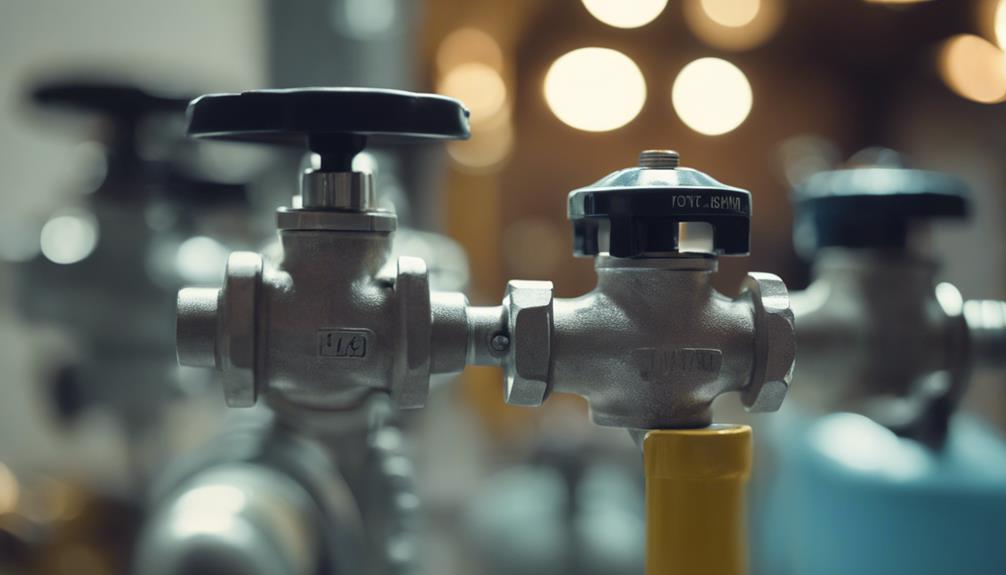
Different valve designs, such as gate valves, ball valves, and globe valves, require specific methods to open and close. Gate valves involve turning a wheel-like handle clockwise to close and counterclockwise to open. Ball valves use a lever handle to control the flow, with a perpendicular position indicating closed and parallel for open. Globe valves have a wheel-like handle that moves up and down to regulate water flow.
Understanding these variations is essential for proper maintenance and timely shut off in emergencies, ensuring the safety of your home and preventing water damage.
Finding Main Water Shut Off Valve
Locating the main water shut off valve is a vital step in safeguarding your home against potential water damage emergencies. The main water line valve is typically found in the basement or crawlspace, but its location isn't standardized in homes. To find it, check at eye-level in the basement or near the ground. Sometimes, the valve might be attached to the water meter outside the home, or its location could be noted in a property inspection report.
Knowing where this valve is located is essential for quick response in case of a water leak. Regularly checking and maintaining this valve ensures it functions properly when needed, helping to prevent costly water damage and ensuring the safety of your home.
Regular Valve Maintenance Tips
Maintaining water valves is an essential aspect of home ownership that shouldn't be overlooked. Here are some regular valve maintenance tips:
Test all valves: Regularly test all the valves in your home at least twice a year to make certain they're functioning correctly.
Check for faults: Make sure the valves aren't stuck or have any faulty parts that could lead to leaks.
Inform family members: It's important that all members of your household know the locations of the valves in case of emergencies.
Write instructions: Consider writing out clear instructions on how to shut off the water in different areas of your home for easy reference.
Deakins Restoration Recommendations
To guarantee the safety of your home and prevent costly water damage, it's advisable to follow the valve maintenance recommendations provided by Deakins Restoration. Deakins Restoration emphasizes the importance of periodic valve checks to make sure they're in good working condition.
It's vital that all family members are aware of the valve locations and know how to act promptly in case of a water leak. If you find yourself unable to shut off the water valves in time during an emergency, don't hesitate to call on the experts at Deakins Restoration.
Their assistance can help prevent additional water damage, reduce cleanup costs, and alleviate the stress associated with water emergencies. Trust in Deakins Restoration for expert help in safeguarding your home from water-related disasters.
Expert Help for Water Damage
When faced with water damage, seeking expert help is essential in mitigating further issues and guaranteeing effective restoration. Here are four reasons why expert assistance is vital in dealing with water damage:
Specialized Knowledge: Professionals have the expertise to assess the extent of the damage accurately.
Advanced Equipment: Experts utilize specialized tools and equipment to address water damage effectively.
Quick Response: Professional water damage restoration teams can respond promptly to mitigate the damage.
Prevention of Mold: Timely intervention by experts helps prevent the growth of mold and mildew, which can pose health risks.
Don't hesitate to reach out to professionals like Deakins Restoration to ensure your property is restored correctly and efficiently.
When you notice small leaks at home, act promptly to prevent major damage. Inspect pipe joints, supply lines, and toilet flappers for signs of leaks.
Shut off water at the source and mop up standing water to avoid costly repairs. Consider installing leak detection devices and schedule regular maintenance to prevent future issues.
Remember, addressing small leaks early can save you time and money in the long run.
Key Takeaways
Regularly inspect pipe joints, supply lines, and toilet flappers for small leaks.
Act promptly to prevent major damage by addressing leaks as soon as they are detected.
Consider installing leak detection devices to catch leaks early.
Schedule regular maintenance to prevent future issues and avoid costly repairs.
Addressing small leaks early can save time and money in the long run.
Identifying Common Household Water Leaks
When inspecting common household water leaks, it's important to keenly observe for subtle signs that indicate potential issues in plumbing systems or roofing structures.
For plumbing leaks, watch out for leaking pipe joints under sinks, stains beneath supply line connections, or broken toilet tank flappers.
On the other hand, signs of roof leaks include a musty smell in the attic, peeling paint around skylights, or missing/damaged shingles.
By promptly identifying these issues, we can prevent costly water damage repairs, minimize mold growth risks, and maintain a safe environment for everyone.
Responding to Water Damage Incidents
In responding to water damage incidents, our immediate priority is to shut off the local water supply at the leak site to prevent further damage.
Once the water is turned off, it's essential to locate shut-off valves for sinks, dishwashers, toilets, and refrigerators to isolate the affected area.
Mopping up standing water promptly helps prevent additional structural damage and minimizes the risk of mold growth.
For safety and health reasons, it's best to leave mold cleanup to professionals and contact water damage experts from Deakins Restoration for proper remediation.
Acting swiftly and efficiently can mitigate the impact of water damage incidents, safeguarding your property and ensuring a swift return to normalcy.
Preventative Measures for Leak Management
Upon addressing water damage incidents swiftly and efficiently, our focus now shifts to implementing proactive strategies for effective leak management.
Regularly inspect plumbing fixtures and appliances for leaks.
Install water leak detection devices in key areas.
Conduct routine maintenance on roofs to prevent potential leaks.
When tackling DIY sewage cleanup, we expose ourselves to harmful bacteria and biohazards, increasing infection risks. Improper handling can lead to the spread of harmful microbes, leaving hidden health hazards.
Professional assistance is essential as experts possess the necessary knowledge, skills, and specialized gear for safe cleanup. Commercial-grade equipment helps remove water and sewage, preventing the spread of health hazards.
Thorough sanitization eliminates harmful microbes, with priority on safety for a clean environment. Swift cleanup prevents mold growth and future risks. Consider the importance of professional services to restore your home safely and effectively.
Key Takeaways
DIY sewage cleanup risks health due to pathogens.
Professionals ensure safe handling and thorough sanitization.
Use commercial-grade equipment for effective cleanup.
Exposure to sewage leads to severe illnesses.
Immediate cleanup prevents biohazard spread and health risks.
Risks of DIY Sewage Cleanup
When it comes to sewage cleanup, opting for a do-it-yourself approach poses significant risks that can compromise our health and safety. Sewage backups contain harmful bacteria and pathogens that can lead to serious health issues if not handled properly.
DIY cleanup may expose us to biohazards, increasing the risk of infections and diseases. Improper handling of contaminated materials can result in the spread of harmful microbes throughout the property, posing a threat to our well-being.
Without the necessary equipment and expertise, DIY efforts often fall short in effectively sanitizing and decontaminating the affected areas, leaving behind hidden health hazards.
To ensure our safety and avoid potential health risks, seeking professional assistance for sewage cleanup is essential.
Importance of Professional Assistance
Hiring professional help for sewage cleanup guarantees thorough decontamination and secure restoration of affected areas. When dealing with sewage backups, it's important to prioritize safety and thorough cleaning. Below, we outline the benefits of seeking professional assistance in sewage cleanup:
Benefits of Professional Assistance
Description
Expertise
Professionals have the necessary knowledge and skills for effective cleanup.
Safety Equipment
They use specialized gear to guarantee safe handling of contaminated materials.
Thorough Cleaning
Professionals conduct detailed sanitization to eliminate health hazards.
Preventing Future Risks
Proper cleanup avoids mold growth and future health issues.
Opting for professional services ensures a swift and thorough cleanup process, safeguarding your health and restoring your home to a safe state.
Steps in Safe Sewage Cleanup
To guarantee a thorough and safe sewage cleanup process, we must follow essential steps to protect against health risks and contamination.
Firstly, it's important to remove water and sewage using commercial-grade equipment to eliminate the source of contamination.
Secondly, safe disposal of contaminated property is necessary to prevent health hazards from spreading.
Using professional-grade air movers to dry out affected areas helps prevent mold growth and further health issues.
Thorough sanitization is then required to ensure all harmful microbes are eradicated.
Lastly, experts should handle cleaning in hard-to-reach areas to ensure complete safety.
Health Hazards of Sewage Exposure
Proper handling and swift response to sewage exposure are critical in mitigating the health hazards associated with such incidents. Exposure to sewage backups can introduce harmful bacteria, pathogens, and biohazards into our living spaces, posing serious health risks. These contaminants can lead to severe illnesses and even death if not addressed promptly and professionally.
Mold growth is another concern resulting from improper cleanup, further exacerbating health issues. Sewage backups must be addressed cautiously to prevent the spread of harmful microbes that can harm both occupants and pets. It's essential to prioritize safety and engage professional services from Deakins Restoration to guarantee thorough sanitization and elimination of health hazards for a safe and liberated living environment.
Benefits of Immediate Cleanup
Swift action following a sewage backup incident is essential to mitigate health risks and guarantee a safe living environment. When cleanup is immediate, we benefit from:
Preventing the spread of harmful bacteria and pathogens: Ensuring the safety of our loved ones.
Avoiding potential deadly health risks associated with biohazards: Protecting our well-being.
Ensuring a safe living environment: Promoting peace of mind and comfort.
Access to 24/7 professional services for emergencies: Providing reliable assistance in critical situations.
Restoring the home to a safe and comfortable state: Returning to normalcy swiftly and securely.
To tackle carpet odor from water damage, start by identifying the water source accurately. Inspect for leaky pipes, roof issues, and even consider pets as culprits. Moisture fuels mold growth, leading to odors.
Utilize white vinegar, cat litter in open containers, and baking soda to absorb odors effectively. Remember to change the cat litter and baking soda regularly for best results.
Mold thrives in wet areas, causing musty odors and health risks. Guarantee thorough drying and mold remediation for a fresher-smelling and healthier environment.
Your carpets will thank you with a renewed freshness.
Key Takeaways
Identify and fix the source of water damage promptly.
Thoroughly dry affected areas to prevent mold growth.
Utilize white vinegar and baking soda for odor absorption.
Consider professional mold remediation for severe cases.
Implement preventive measures like proper ventilation to control odors.
Identifying the Source of Water Damage
To effectively address carpet odor from water damage, you must first accurately pinpoint the source of the water damage. It's important to play detective here - check for leaky pipes, roof issues, or even sneaky pets with a penchant for indoor water sports.
Remember, moisture is the fuel that mold and mildew thrive on, so finding and fixing the source is key. Don't let that funky smell lead you on a wild goose chase; tackle the issue head-on to banish it for good.
Once you've sleuthed out the culprit, you'll be one step closer to reclaiming your fresh-smelling carpets and restoring peace to your nostrils.
Implementing Odor Absorption Techniques
Implement odor absorption techniques by strategically placing household items known for their ability to neutralize and eliminate unwanted smells. White vinegar, cat litter, and baking soda are your best allies in this battle against carpet odor.
Place bowls of white vinegar around the room to absorb the musty smell. Utilize clean cat litter in open containers to help trap odors effectively. Baking soda, a versatile odor absorber, can be placed in open containers throughout the affected area.
Remember to change the cat litter and baking soda regularly to guarantee maximum odor absorption. By incorporating these simple yet effective odor absorption techniques, you can start enjoying a fresher-smelling carpet in no time!
Understanding the Impact of Mold
Understanding the impact of mold is crucial for effectively addressing and preventing its potential hazards in your indoor environment. Mold thrives in damp, dark spaces, making it a common culprit in water-damaged areas.
Not only does mold cause that musty odor you're trying to get rid of, but it can also pose health risks, especially for those with respiratory issues. Mold comes in various colors, from green to black, and can release toxins into the air through its spores.
To tackle mold effectively, make sure thorough drying of affected areas, use mold remediation experts for inspection, and consider preventive measures like proper ventilation and moisture control. Don't underestimate the power of mold – stay informed to keep your indoor environment safe and odor-free!
Frequently Asked Questions
How Long Does It Take for Mold to Develop After Water Damage?
After water damage, mold can start to develop within 24 to 48 hours. If you don't address the moisture issue promptly, mold will throw a party in your home before you know it.
So, don't let those spores get comfy and multiply! Take action fast to prevent mold from crashing on your carpet's turf.
Can I Use Essential Oils to Mask the Mildew Smell?
You can try essential oils to mask the mildew smell, but keep in mind they mightn't fully eliminate the odor. Essential oils can offer a pleasant fragrance that may help cover up the musty scent temporarily.
However, it's important to address the root cause of the odor, like water damage or mold growth, to effectively get rid of the smell for good.
Is It Safe to Use Hydrogen Peroxide on Carpet Odors?
When dealing with carpet odors, it's safe to use hydrogen peroxide as a spot treatment. Test it in a hidden area first to confirm it won't discolor your carpet.
Apply a small amount on a cloth and gently dab the affected spot. Let it sit for a few minutes before blotting with a clean, damp cloth.
Always remember to ventilate the area while treating the odor.
Should I Be Concerned About Mold in My HVAC System?
You should definitely be concerned about mold in your HVAC system. Mold can thrive in the dark, damp environment of your ducts, circulating mold spores throughout your home.
To address this issue, consider having your HVAC system inspected by professionals. They can identify and eliminate any mold growth, ensuring your indoor air quality remains safe and healthy for you and your family.
Don't underestimate the impact of mold in your HVAC system!
Can I Use Charcoal Bags to Absorb Carpet Odors Effectively?
To effectively absorb carpet odors, charcoal bags can be a great option. Place them strategically around the affected area to help neutralize unpleasant smells.
Remember to replace or recharge the charcoal bags as needed to maintain their odor-absorbing power.
Additionally, guarantee proper ventilation in the room to enhance the effectiveness of the charcoal bags in freshening up your space.
Insurance typically covers water damage in certain situations, like sudden water discharge from burst pipes or accidental leaks. It may also cover damage following a fire, but it won't usually cover flood damage or damage from neglect or intentional acts.
Remember to prioritize safety, turn off water sources, prevent further damage, and document everything for a successful claim.
By understanding the types of water damage covered and not covered, you can navigate insurance claims effectively and protect your home.
Key Takeaways
Covered water damage includes burst pipes and accidental leaks.
Not covered: flood damage, intentional acts, and lack of maintenance.
Steps: prioritize safety, turn off water, prevent further damage.
Tips: document damage, seek professional help, communicate clearly.
Homeowners insurance is essential for protection against water damage.
Understanding Homeowners Insurance Coverage
Understanding your homeowners insurance coverage is essential to ensure you're adequately protected in the event of water damage. It's like having a shield against unexpected leaks, burst pipes, or even water damage from that time you tried to cook and the fire department had to come to your rescue.
Knowing what your policy covers can save you from getting soaked in unexpected expenses. So, explore the details and make sure you're not left high and dry when water damage strikes. Remember, a little knowledge now can prevent a flood of problems later.
Stay informed, stay protected, and keep those water woes at bay!
Types of Water Damage Covered
Water damage covered by homeowners insurance includes sudden or accidental water discharge, burst pipes, accidental leaks, water damage after a fire, and damage from storms or roof leaks.
Covered Water Damage
Examples
Sudden Water Discharge
Washing machine overflow
Burst Pipes
Freezing pipes bursting
Accidental Leaks
Leaking dishwasher
Water Damage After a Fire
Extinguishing flames' water
Damage from Storms/Roof
Hailstorm roof leak damage
Types of Water Damage Not Covered
If your home sustains water damage due to flood, lack of maintenance, intentional acts, or earth movement, these are instances not covered by homeowners insurance.
Flood Damage (requires separate flood insurance)
Damage Due to Lack of Maintenance or Negligence
Water Damage from Intentional Acts
Water Damage from Earth Movement (e.g., earthquake)
Steps Before Filing an Insurance Claim
Before filing an insurance claim for water damage, prioritize the safety of individuals in the home. Turn off the water source and take steps to prevent further damage. Ensuring everyone's well-being is key – water damage can be a hassle, but safety comes first, right?
Shut off that water pronto to stop the flow of damage. Move any valuables out of harm's way, and board up doors and windows to keep the water party from spreading. Get rid of any standing water and start drying things out – mold isn't a plus-one you want at this party.
Tips for Filing a Successful Claim
When filing an insurance claim for water damage, meticulous documentation of the damage before cleanup is essential for a successful outcome. Here are some tips to help you navigate the process smoothly:
Review your insurance policy to understand coverage details.
Take photos or videos of the damage before starting cleanup.
Seek professional assessment and restoration services.
Obtain written estimates for each stage of the restoration process.
Following these tips won't only make your claim filing process easier but also increase your chances of a successful outcome. Remember, thorough documentation and clear communication with your insurance company are key to getting the support you need during this stressful time.
Frequently Asked Questions
Does Homeowners Insurance Cover Water Damage From a Leaking Aquarium?
If you've got a leaky aquarium causing water damage, you might wonder if your homeowners insurance will plunge to help. Insurance typically covers sudden or accidental water discharge, like burst pipes, but there could be some fishy exclusions.
Remember to review your policy, document the damage, and work with professionals for a smooth claim process.
Don't let a leak turn your home into a fish tank—immerse into those insurance details!
Is Water Damage From a Burst Waterbed Covered by Insurance?
If your waterbed bursts, causing water damage, your homeowners insurance may cover it. Burst waterbeds are typically considered sudden or accidental water discharge, similar to burst pipes.
Remember to review your policy and document the damage before cleanup. Stay proactive by turning off the water source, moving valuables, and drying the area promptly.
Engaging with professionals for assessment and restoration can help streamline the claims process.
Will Insurance Cover Damage From a Malfunctioning Sprinkler System?
If your sprinkler system malfunctions and causes damage, insurance may cover it depending on your policy.
Document the incident with photos and contact your insurance provider to file a claim promptly.
Remember to keep all receipts and communicate clearly with the adjuster.
Stay on top of the process to guarantee a smooth resolution.
Don't let those sprinkler shenanigans dampen your day – your insurance may have your back!
Does Insurance Cover Water Damage Caused by a Pet's Water Spill?
If Fido's water spill causes damage, check your policy. Sudden mishaps like this are often covered.
Take action fast to prevent more damage. Turn off the water source, move valuables, and dry the area. Document everything for your claim.
Get pros involved for restoration. Keep those receipts handy!
Is Water Damage From a Broken Refrigerator Ice Maker Covered by Insurance?
When a broken refrigerator ice maker causes water damage, your homeowners insurance may cover it if the issue is considered sudden or accidental. Burst pipes or appliance leaks are typically within coverage.
Remember, it's essential to review your policy details and document the damage for a smooth claims process.
Stay cool - insurance can help you handle those unexpected water woes!
Grey water, also known as sullage or Category 2 water, is wastewater from sources like dishwashers and sinks. It contains contaminants that can jeopardize health and must be handled cautiously to prevent disease transmission.
Grey water may include substances such as soap, grease, and food particles, making it extremely important than black water but still posing risks.
Proper cleaning methods are essential due to the presence of harmful substances. Understanding the risks and adhering to guidelines for safe cleanup are imperative.
Professional restoration services offer expertise and advanced equipment to mitigate harm effectively.
Learn more about grey water characteristics, risks, and safe handling practices.
Key Takeaways
Grey water is contaminated water from sources like sinks and dishwashers.
It contains substances like soap, grease, and food particles.
Not safe for consumption due to health risks from harmful contaminants.
Requires proper handling and cleaning methods to prevent disease spread.
Less harmful than black water but still poses risks if not managed correctly.
Definition of Grey Water
Grey water, also known as Category 2 water or sullage, refers to water that contains a certain level of contamination which poses potential health risks during cleanup and restoration processes. This type of water is not safe for consumption and may come from sources such as dishwashers, washing machines, or sinks.
While grey water is not as heavily contaminated as black water, which contains sewage, it still carries substances like soap, grease, and food particles.
When dealing with grey water, caution is necessary to prevent the spread of disease-causing organisms through contact. Prompt and proper cleanup is essential to avoid escalation to Category 3 water, which can harbor dangerous bacteria.
Characteristics and Sources
When examining the characteristics and sources of Category 2 water, it is essential to understand the nature of its contamination and origins to effectively address potential health hazards during cleanup and restoration procedures.
Category 2 water, commonly known as grey water or sullage, contains a level of contamination that can pose health risks. Sources of grey water include toilet bowls with urine, dishwasher water, and flood damage from sump pump failures.
Although less harmful than black water, grey water still requires caution during cleanup due to the presence of substances like soap particles, oils, grease, and food residue.
Proper handling and cleaning methods are vital to prevent the escalation of contamination and the associated health risks.
Risks Associated With Grey Water
Understanding the potential health hazards associated with Category 2 water contamination is vital for implementing effective cleanup and restoration measures. When dealing with grey water, it is essential to be aware of the following risks:
Containment of Harmful Substances: Grey water may contain soap particles, oils, grease, and food residue, which can pose health risks upon exposure.
Transfer of Disease-Causing Organisms: Contact with grey water can lead to the transmission of disease-causing organisms, potentially resulting in health issues.
Risk of Escalation to Category 3: If not properly addressed, grey water contamination can escalate to Category 3 water due to bacterial growth, exacerbating health hazards. Proper handling and cleanup procedures are necessary to mitigate these risks effectively.
Cleaning Grey Water Safely
To guarantee the safe and effective cleanup of grey water, adherence to established guidelines and protocols is essential.
Grey water, also known as Category 2 water, may contain contaminants that pose health risks if not handled properly. When cleaning grey water, it is important to follow guidelines from organizations like the EPA and IICRC.
Drying all affected materials thoroughly, removing porous items to prevent mold growth, and disinfecting hard surfaces are key steps in the cleanup process. Additionally, HVAC equipment should be cleaned or replaced to prevent the recirculation of mold spores. Proper handling of grey water is crucial to avoid serious health issues and ensure a thorough restoration of the affected area.
Importance of Professional Restoration
Professional restoration services play an essential role in mitigating the extensive harm caused by Category 2 water damage if not promptly and properly addressed.
Importance of Professional Restoration:
Specialized Expertise: Restoration companies like Deakins Restoration have trained professionals who understand the complexities of Category 2 water damage.
Advanced Equipment: Utilizing specialized tools and equipment, professionals can effectively remove contaminated water and restore the affected area.
Prevention of Secondary Damage: Prompt action by restoration experts can prevent mold growth, structural damage, and other long-term consequences associated with untreated Category 2 water damage.
Commercial water damage can stem from various sources like leaking roofs and burst pipes. It can lead to operational disruptions, financial losses, and harm business reputation.
Visible signs include water stains, musty odors, and mold growth. Costs involve restoration services, property repairs, and addressing structural issues.
Immediate action is important to minimize damage and prevent long-term effects. Specialized equipment and expertise are essential for efficient restoration.
Residential and commercial water damage have distinct causes and implications. Understanding legal responsibilities and maintenance strategies are essential for prevention.
Discover more insights to safeguard your business operations effectively.
Key Takeaways
Commercial water damage results from various sources like leaks and flooding.
Immediate action is crucial to mitigate financial losses and operational disruptions.
Specialized equipment and expertise are necessary for efficient restoration in commercial properties.
Legal implications, including liability and insurance coverage, impact responsibility in water damage cases.
Proactive maintenance, such as regular inspections and prompt repairs, helps prevent extensive damage.
Common Causes of Commercial Water Damage
In commercial settings, water damage can stem from various sources, ranging from leaking pipes to natural disasters, posing significant risks to the property and its occupants.
Leaking roofs, burst pipes, malfunctioning sprinkler systems, and poorly maintained HVAC units are common culprits of water damage in businesses. Additionally, inclement weather such as heavy rainfall or flooding can exacerbate these issues.
It is vital for businesses to implement proactive measures to prevent water damage, such as conducting regular maintenance checks, promptly repairing leaks, and ensuring proper drainage systems are in place.
By being vigilant and addressing potential vulnerabilities, businesses can minimize the impact of water damage and safeguard their property and assets.
Effects of Water Damage on Businesses
Water damage can have severe consequences on businesses, impacting operations, finances, and the overall reputation of the establishment. Operational disruptions due to water damage can lead to downtime, affecting productivity and causing financial losses.
Restoration costs and repairs can also strain a business's financial resources. Additionally, a water-damaged business may suffer reputational damage, potentially losing customer trust and loyalty. The perception of a poorly maintained or unsafe environment can drive customers away and harm the brand's image.
Timely and effective response to water damage is vital to minimize these effects and restore the business to normal operations swiftly. Businesses must prioritize proactive measures to prevent water damage and have a contingency plan in place to address any unforeseen incidents promptly.
Signs of Water Damage in Commercial Buildings
Detecting signs of water damage in commercial buildings requires a keen eye for subtle indicators that may point to underlying issues. Common signs include:
Water stains on walls or ceilings
Musty odors
Peeling paint or wallpaper
Warped or discolored flooring
Mold growth
Additionally, bulging walls, rust or corrosion on pipes, and a sudden increase in water bills can also indicate water damage. It's essential to address these signs promptly to prevent further damage and potential health risks.
Regular inspections and maintenance can help catch water damage early on, saving businesses time and money in the long run. Being vigilant and proactive in identifying these signs is key to maintaining a safe and functional commercial space.
Costs Associated With Water Damage
Commercial water damage can result in significant financial burdens for businesses due to the costs associated with restoration, repairs, and potential loss of revenue. The expenses incurred from water damage can include professional restoration services, repair or replacement of damaged property, and addressing any structural issues.
Restoration costs can vary depending on the extent of the damage, the size of the affected area, and the type of water contamination present. Additionally, businesses may face indirect costs such as downtime, loss of productivity, and potential long-term impacts on their reputation.
It is essential for businesses to be prepared for these financial implications and to act swiftly to minimize both the immediate and long-term costs associated with commercial water damage.
Importance of Immediate Action
Taking prompt action in response to water damage incidents is essential to minimizing the extent of damage and preventing further complications. Immediate intervention can greatly reduce the long-term effects of water damage, such as structural issues and mold growth. Here is a breakdown of the importance of immediate action in the event of water damage:
Immediate Action
Importance
Quick Response
Minimizes Damage
Water Extraction
Prevents Mold Growth
Professional Help
Guarantees Proper Restoration
Role of Insurance in Water Damage
In the aftermath of water damage incidents, understanding the importance of insurance coverage is vital for ensuring thorough protection and effective restoration of affected properties. Standard insurance policies may not cover all types of water damage, particularly flood damage, which is typically not included. It is advisable to contemplate purchasing separate flood insurance to bridge this gap in coverage.
In the event of water damage, contacting the insurance company immediately is paramount. Familiarizing oneself with policy exclusions and coverage details can help expedite the claims process and ensure that necessary steps are taken promptly. Being proactive in addressing insurance matters can greatly impact the outcome of water damage restoration efforts.
Professional Water Damage Restoration Process
Upon experiencing water damage, hiring professional restoration services is essential to guarantee thorough and effective remediation of the affected property.
Professional water damage restoration companies, such as Deakins Restoration, offer experienced specialists available 24/7 for emergencies. These experts assure proper extraction of water, preventing hidden moisture damage that can lead to mold growth.
Different materials within the property require specific cleaning protocols to make sure complete restoration. Mold prevention specialists are also available to inspect for any post-water damage growth and take necessary actions.
Technologies Used in Water Damage Restoration
Utilizing advanced technology is essential to the efficient and effective restoration of properties affected by water damage. In the field of water damage restoration, professionals employ cutting-edge technologies to expedite the drying process and prevent secondary damage.
Thermal imaging cameras are utilized to detect hidden pockets of moisture within walls and floors, allowing for targeted drying efforts. High-powered air movers and dehumidifiers work in tandem to remove moisture rapidly from the air and surfaces.
Moisture meters are used to monitor moisture levels throughout the restoration process, ensuring thorough drying. Additionally, advanced software aids in documenting the progress of restoration efforts and tracking moisture levels accurately.
These technologies play a vital role in ensuring a successful water damage restoration outcome.
Factors Affecting Water Damage Recovery Time
Factors influencing water damage recovery time vary based on the extent of the damage and the promptness of the response. Key factors include the source of water, the affected materials, and the size of the area impacted. Below is a table highlighting some factors affecting water damage recovery time:
Factors Affecting Recovery Time
Description
Source of Water
Clean water (Category 1) dries faster than contaminated water (Category 2 or 3).
Affected Materials
Porous materials like carpets require longer drying times than non-porous materials.
Size of Area Impacted
Larger areas will take more time to extract water and complete the drying process.
Understanding these factors can help in planning and executing an effective water damage recovery strategy.
Key Differences in Commercial Vs. Residential Water Damage
Commercial and residential water damage present distinctive challenges and considerations for effective mitigation and restoration.
In commercial settings, water damage can affect larger areas, impacting multiple floors and complex structures. The source of water damage in commercial properties is often different, with factors like HVAC systems, machinery, and inventory playing a role. Commercial spaces may also require specialized equipment and techniques for efficient restoration.
Conversely, residential water damage is typically contained within a single living space, such as a home or apartment. The causes of water damage in residential settings are often related to plumbing issues, appliances, or natural disasters. Restoration in residential properties focuses on returning the living space to a safe and habitable condition for occupants.
Legal Implications of Commercial Water Damage
Legal accountability in cases of commercial water damage requires a thorough understanding of contractual obligations and liability considerations. When water damage affects a commercial property, determining responsibility is essential.
Property owners must adhere to maintenance and safety standards outlined in leases or contracts with tenants. Failure to address water damage promptly can result in legal repercussions, potential lawsuits, and financial liabilities.
Additionally, insurance coverage and policy details play a significant role in determining the extent of financial responsibility in such cases. Seeking legal advice and understanding the legal implications of commercial water damage is vital to protect all parties involved and maintain compliance with relevant laws and regulations.
Future Prevention Strategies for Businesses
To effectively safeguard businesses against potential water damage risks, implementing proactive maintenance strategies is essential in ensuring long-term protection and operational continuity. Regularly inspecting gutters, roofs, plumbing lines, and drains, as well as scheduling annual expert inspections, can help identify and address vulnerabilities before they escalate.
Promptly addressing roof leaks and maintaining plumbing systems are vital preventative measures. Understanding the importance of preventative maintenance can greatly reduce the likelihood of extensive water damage. By staying proactive and vigilant in maintenance practices, businesses can mitigate risks and minimize the impact of water damage on their operations.
Prioritizing these strategies can lead to a more resilient and secure commercial environment in the face of potential water-related challenges.